
#/media/File:Sole_menfi.jpg)
History
The territory of Menfi, on the south-western coast of Sicily, has been affected by human settlements since ancient times. Some historians hypothesize that the city of Inico, home to the palace of Cocalo, king of the Sicani, was located near the current village of Porto Palo, considered the eastern port of Selinunte.
It is assumed that the Saracens landed in this area to conquer Sicily, where they began to establish their settlements, and that the construction of the hamlet of Burgiomilluso in 1239 was carried out on a site already occupied by a Saracen village.
After the disappearance of the Muslims in Sicily, the land of Burgiomilluso was left without inhabitants. In 1518, under Spanish domination, Giovanni Vincenzo Tagliavia obtained from Charles V the privilege of building a hamlet on the territory of Menfi, but he was unable to attract inhabitants, causing the project to fail. A century later, in 1638, Diego Tagliavia Aragona Pignatelli began the construction of the first urban nucleus of Menfi by granting lands to peasant families in the surrounding area and building the first homes. From 1638, the place would be called Terra Memphis.
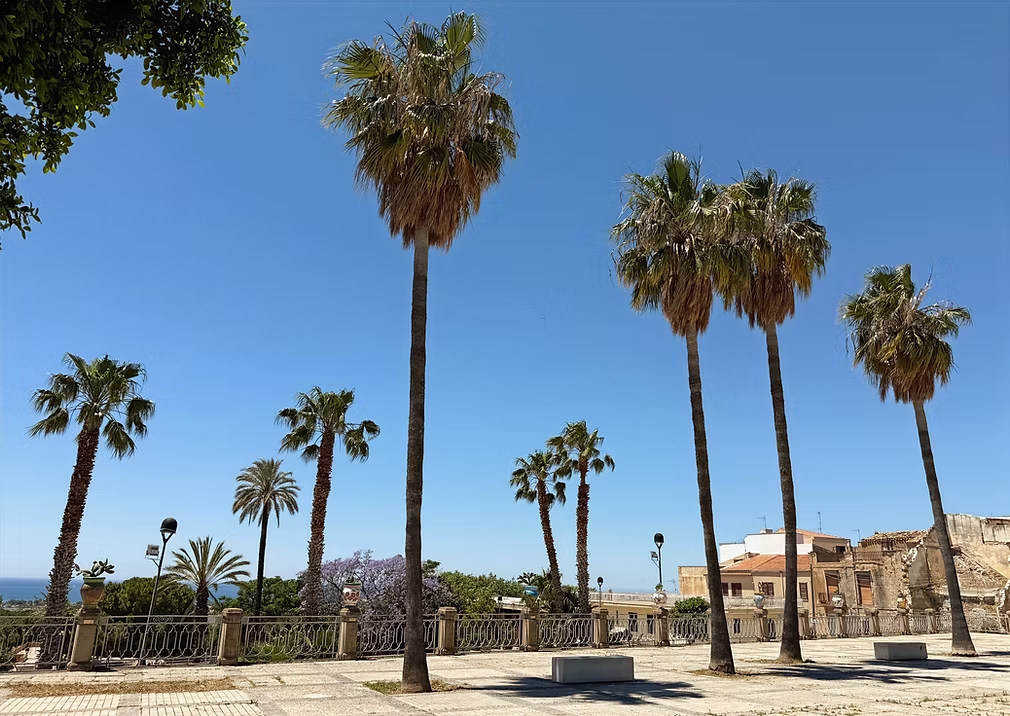
Photo of one side of Piazza Vittorio Emanuele, by Giovanni Cusenza
Attractions
In Menfi, there are a few places to visit that deserve to be mentioned, from churches, to old buildings, to incredible beaches.
Begun in 1662 and completed after 1700, it was elevated to a parish in 1705. Its interior consisted of three large naves and five arches. The church, together with the Torre Federiciana, the Palazzo Pignatelli, and the Town Hall (1927), constituted one of the main architectural elements that form a curtain to the town square. The church was destroyed by the 1968 earthquake, which affected the entire Belice Valley, and subsequently rebuilt.
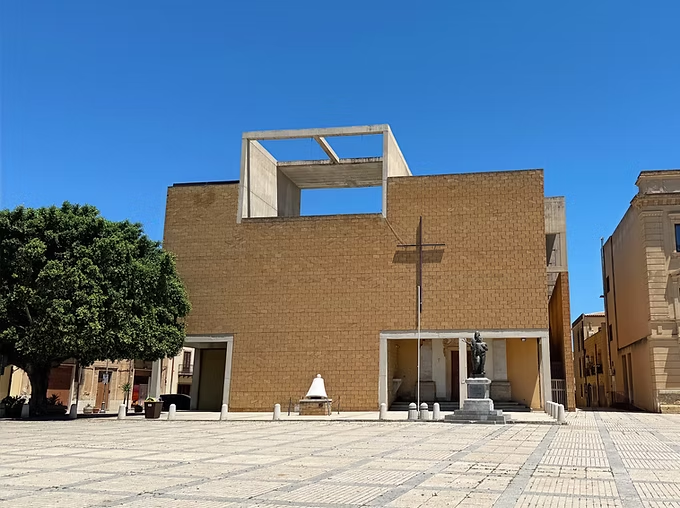
Photo of the Chiesa Madre Sant’Antonio di Padova, by Giovanni Cusenza
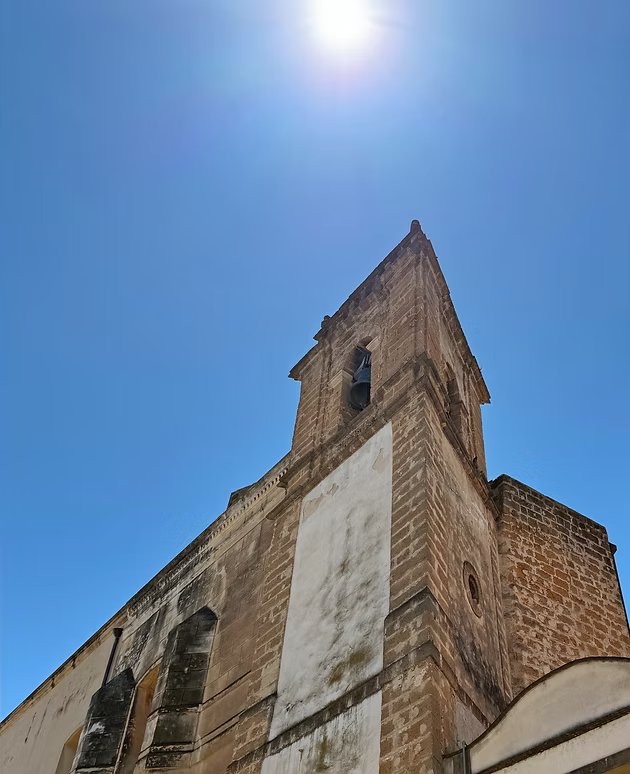
Photo of the Chiesa di San Giuseppe‘s bell tower, by Giovanni Cusenza
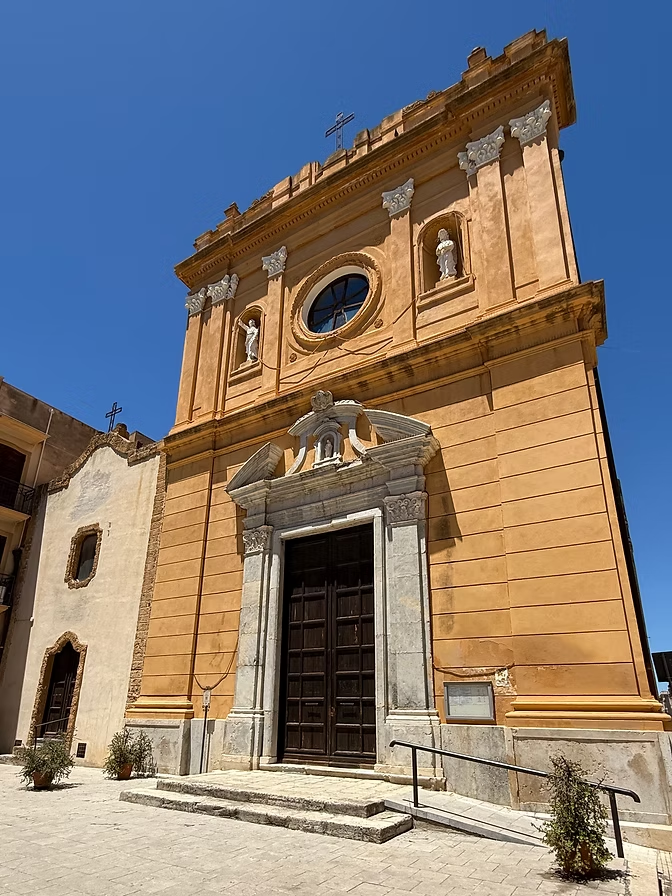
Photo of the Chiesa di San Giuseppe, by Giovanni Cusenza
The Chiesa di San Giuseppe was consecrated on November 9, 1704, as reported by the curate vicar Don Giuseppe Tramuto in the Liber Desponsatorum of the year, under the supervision of Archbishop Francesco Ramirez. From 1709, the church began to host burials, as evidenced by the annotations on the inhumation of Leonarda Patti. Over time, the church became a sort of pantheon for the Cacioppo and Palminteri families, welcoming the remains of prominent members, including Don Vincenzo Cacioppo, Donna Caterina Cacioppo in Palminteri, and Don Giuseppe Cacioppo, who found eternal rest in the church, testifying to its importance as a place of burial and remembrance for these families.
The Chiesa del Collegio di Maria was the result of a religious and social project undertaken in 1807 by the new archpriest Don Melchiorre Cacioppo. At the time, the community of Menfi, which had exceeded 7,000 inhabitants, felt the need for a new religious and welfare space. Cacioppo asked and obtained permission from the king to found a College of Mary and a church connected to it, since the city had only five churches.
In 1830, the church was opened for worship, becoming an integral part of the Collegio di Maria. Over the years, the church and the college worked in close collaboration.
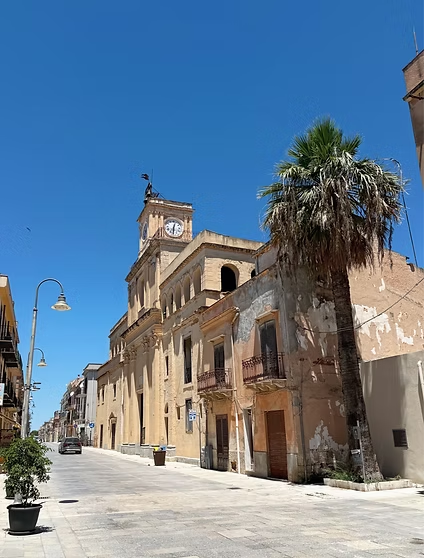
Photo of the Chiesa del Collegio di Maria Santissima Annunziata, by Giovanni Cusenza
The Chiesa del Collegio di Maria became a symbol of family prestige and religious assistance for the community, reflecting the new ambitions and social transformations that marked the transition from the old feudal nobility to an emerging bourgeoisie, committed to strengthening its position through works of charity and devotion.
Terrazza del Belvedere or Calvario, is the highest point in the country. From the square below you enter, climbing a wide staircase, in the part of the former Castle of Zabut which was the fortifi ed acropolis. In the second half of 1800 the few ruins of the castle were demolished to obtain a large terrace, which ends with an exedra with columns, where the rites of Good Friday were celebrated, hence the name “Calvary”, even if after the first war worldwide, since the Crucifixion ceremony no longer took place, it was renamed “Belvedere”. Magnificent is the panorama that sweeps up to the territories of Giuliana, Caltabellotta, Chiusa Sclafani, with the Sicani Mountains in the background.
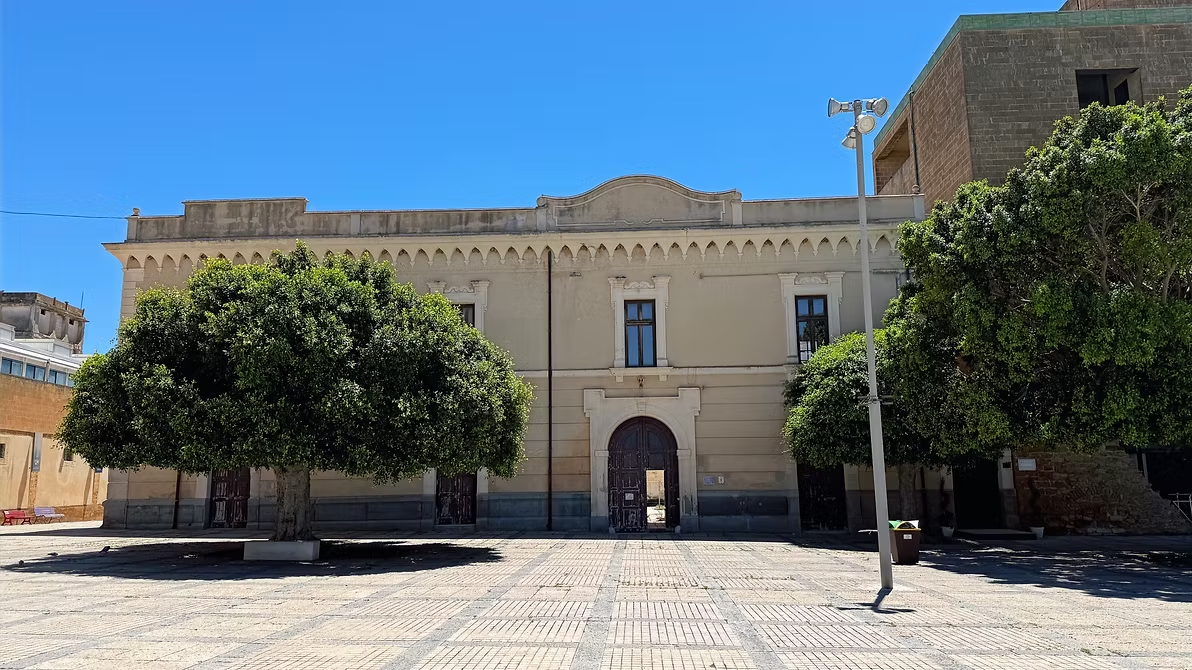
Photo of the Palazzo Pignatelli, by Giovanni Cusenza
Some of the caves are located within the Riserva Naturale di Monte Cofano, a protected natural area located in the municipalities of Custonaci and San Vito Lo Capo, in the province of Trapani.
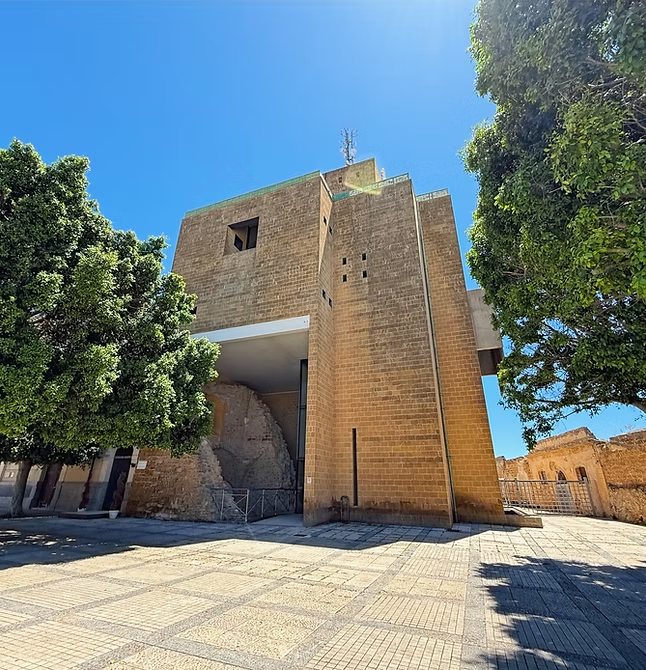
Photo of the Torre Federiciana, by Giovanni Cusenza
This is where the Mediterranean and Tyrrhenian Seas cross. The tower now houses the Museo Civico Antropologico with artifacts from the Punic and Roman eras.
100 meter further back is the small Chiesa di San Liberale, the most loved by fishermen
Terrazza del Belvedere or Calvario, is the highest point in the country. From the square below you enter, climbing a wide staircase, in the part of the former Castle of Zabut which was the fortifi ed acropolis. In the second half of 1800 the few ruins of the castle were demolished to obtain a large terrace, which ends with an exedra with columns, where the rites of Good Friday were celebrated, hence the name “Calvary”, even if after the first war worldwide, since the Crucifixion ceremony no longer took place, it was renamed “Belvedere”. Magnificent is the panorama that sweeps up to the territories of Giuliana, Caltabellotta, Chiusa Sclafani, with the Sicani Mountains in the background.
Photo of the Palazzo Pignatelli, by Giovanni Cusenza
Terrazza del Belvedere or Calvario, is the highest point in the country. From the square below you enter, climbing a wide staircase, in the part of the former Castle of Zabut which was the fortifi ed acropolis. In the second half of 1800 the few ruins of the castle were demolished to obtain a large terrace, which ends with an exedra with columns, where the rites of Good Friday were celebrated, hence the name “Calvary”, even if after the first war worldwide, since the Crucifixion ceremony no longer took place, it was renamed “Belvedere”. Magnificent is the panorama that sweeps up to the territories of Giuliana, Caltabellotta, Chiusa Sclafani, with the Sicani Mountains in the background.
Photo of the Palazzo Pignatelli, by Giovanni Cusenza
Terrazza del Belvedere or Calvario, is the highest point in the country. From the square below you enter, climbing a wide staircase, in the part of the former Castle of Zabut which was the fortifi ed acropolis. In the second half of 1800 the few ruins of the castle were demolished to obtain a large terrace, which ends with an exedra with columns, where the rites of Good Friday were celebrated, hence the name “Calvary”, even if after the first war worldwide, since the Crucifixion ceremony no longer took place, it was renamed “Belvedere”. Magnificent is the panorama that sweeps up to the territories of Giuliana, Caltabellotta, Chiusa Sclafani, with the Sicani Mountains in the background.
Photo of the Palazzo Pignatelli, by Giovanni Cusenza
Terrazza del Belvedere or Calvario, is the highest point in the country. From the square below you enter, climbing a wide staircase, in the part of the former Castle of Zabut which was the fortifi ed acropolis. In the second half of 1800 the few ruins of the castle were demolished to obtain a large terrace, which ends with an exedra with columns, where the rites of Good Friday were celebrated, hence the name “Calvary”, even if after the first war worldwide, since the Crucifixion ceremony no longer took place, it was renamed “Belvedere”. Magnificent is the panorama that sweeps up to the territories of Giuliana, Caltabellotta, Chiusa Sclafani, with the Sicani Mountains in the background.
Photo of the Palazzo Pignatelli, by Giovanni Cusenza
Terrazza del Belvedere or Calvario, is the highest point in the country. From the square below you enter, climbing a wide staircase, in the part of the former Castle of Zabut which was the fortifi ed acropolis. In the second half of 1800 the few ruins of the castle were demolished to obtain a large terrace, which ends with an exedra with columns, where the rites of Good Friday were celebrated, hence the name “Calvary”, even if after the first war worldwide, since the Crucifixion ceremony no longer took place, it was renamed “Belvedere”. Magnificent is the panorama that sweeps up to the territories of Giuliana, Caltabellotta, Chiusa Sclafani, with the Sicani Mountains in the background.
Photo of the Palazzo Pignatelli, by Giovanni Cusenza
Food
As far as food is concerned, below is the traditional food you can find in Custonaci.
Sciavata
Custonaci spincia (in Sicilian “sfincia”, from the Arabic “isfang” or soft dough pancake that is fried and eaten with honey) is a typical dessert eaten before Christmas, prepared for the Immaculate Conception celebration. It is a typical poor dessert, whose main ingredients are flour, milk, and potatoes.
From 6 to 8 December, every year, a festival called Spincia Day is held in Piazza Santuario.
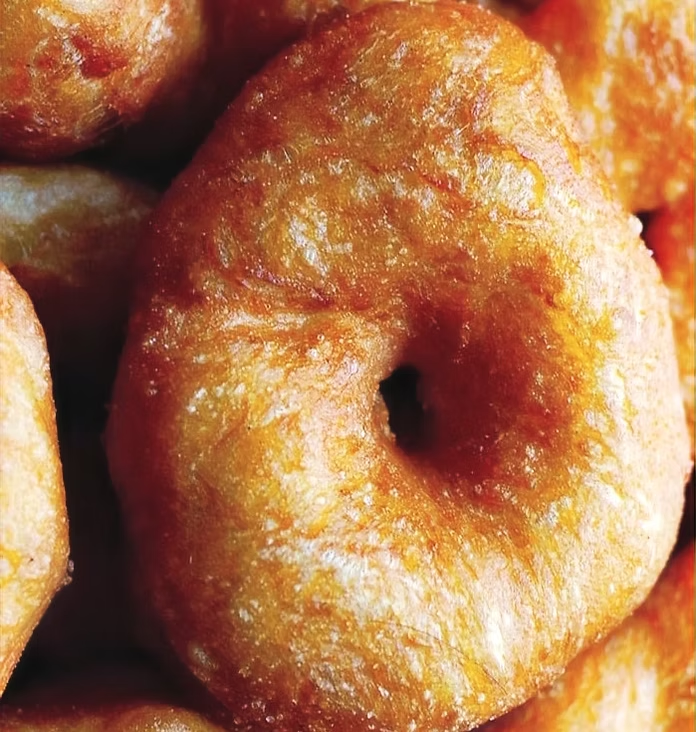
Photo of the Spinci di Custonaci
Carciofo Spinoso
Custonaci spincia (in Sicilian “sfincia”, from the Arabic “isfang” or soft dough pancake that is fried and eaten with honey) is a typical dessert eaten before Christmas, prepared for the Immaculate Conception celebration. It is a typical poor dessert, whose main ingredients are flour, milk, and potatoes.
From 6 to 8 December, every year, a festival called Spincia Day is held in Piazza Santuario.
Photo of the Spinci di Custonaci
In Custonaci it is possible to eat typical dishes of the local cuisine, that of Trapani, and, more generally, of Sicilian cuisine.
Tips
Cycle and walking paths
If you are interested in trekking and cycling, in Menfi it is possible to follow various tracks.
Here is a list of routes with links to the starting point of each one:
– Cycle path Menfi-Porto Palo. If you want to check it out, click here;
– Cycle path Menfi-Bertolino. If you want to check it out, click here;
– Trekking path Porto Palo-Le Solette. If you want to check it out, click here.
Conca della Regina
An event not to be missed for anyone visiting Western Sicily during the Christmas holidays is certainly the Presepe Vivente of Custonaci. It is a suggestive representation of the Christmas nativity scene, which takes place inside the Grotta di Mangiapane, between the months of December and January.